
How to Grow Korean Radish in the Southeast: A Straight-Talk Guide for Small Farms
A practical guide to growing Korean radish (mu) in the Southeast
soil, timing, harvest, and who buys it.
If you can grow a turnip, you can grow a Korean radish.
That's the honest starting point. Because a lot of Southeast growers hear "Asian vegetables" and picture something fussy, foreign, and impossible to sell. Korean radish - the big white one folks call mu - is neither fussy nor impossible. It's a cool-season root crop that fits your ground, your climate, and your calendar better than most things you're already growing.
The problem was never whether you could grow it. The problem has always been the same one that follows small farms everywhere: who's going to buy it, and will they pay you fair.
We'll get to that. But first, let's talk dirt.
Why Korean Radish Makes Sense in the Southeast
Korean radish is built for the shoulder seasons - the cool stretches on either side of your brutal summer. That's a window a lot of Southeast farms leave half-empty because their commodity crops don't want it.
Here's what makes it a good fit:
- It likes your fall and early spring. Cool weather, not frozen. That's most of Georgia, the Carolinas, Alabama, and the Tennessee valley for a good chunk of the year.
- It's fast. Most varieties are ready in 50 to 70 days. You're not tying up ground for half a year hoping it works out.
- It's forgiving. Korean radish isn't as prone to the pest and disease headaches that make some specialty crops a gamble in humid Southern heat, because you're growing it when the heat has backed off.
- It stores. Unlike a lot of tender produce, a properly cured mu holds up. That gives you and your buyer some breathing room.
You're not reinventing your whole operation. You're filling a gap in your calendar with a crop that pays more per acre than what you'd otherwise leave that ground doing.
Getting the Ground Right
Korean radish wants what most root crops want, just done with a little care.
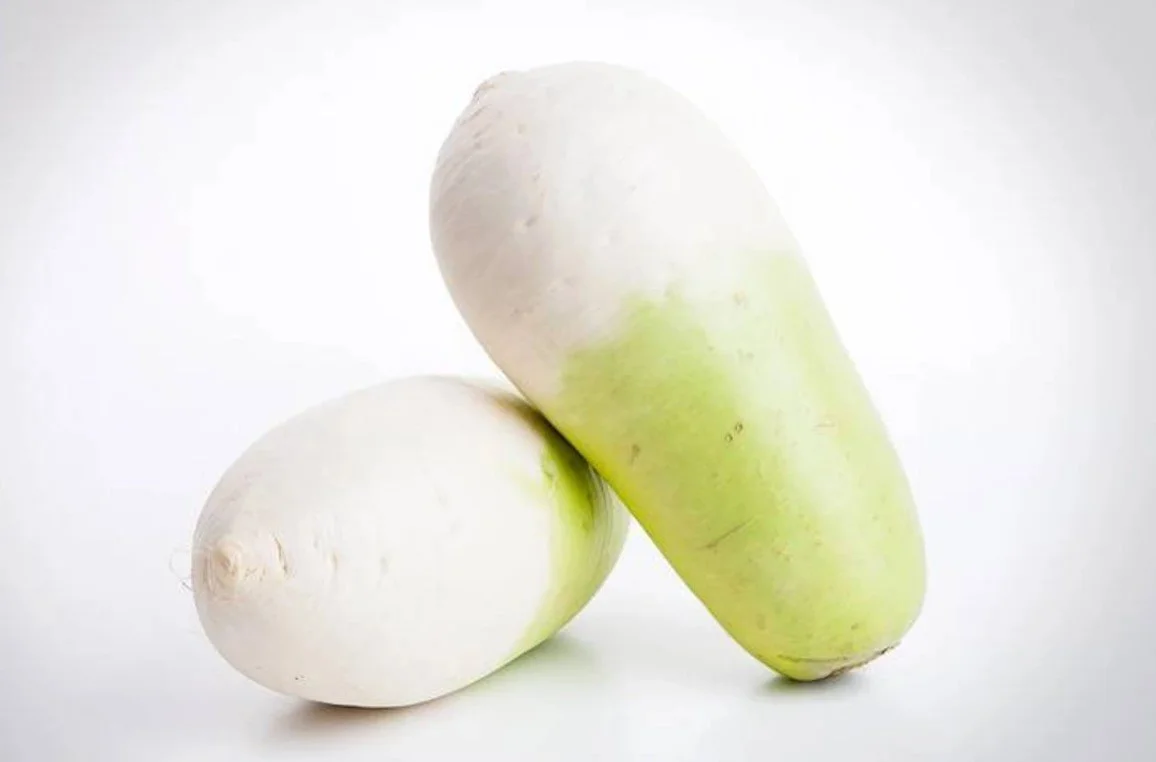
Soil. Loose, deep, well-drained. This is the big one. That long white root needs room to run straight down. If it hits compacted ground or heavy clay, you get forked, stunted, ugly roots that no buyer wants. If your ground is tight, work it deep and consider raised beds. Sandy loam is your friend here.
pH. Aim for 6.0 to 6.8. Most Southeast growers already know their numbers from other crops. If you don't, your county Extension office will run a soil test cheap. Do it before you plant, not after you're disappointed.
Fertility. Radish isn't a heavy feeder, but it wants steady nutrition. Too much nitrogen and you'll grow beautiful tops and weak roots - which is the opposite of what you're selling. Balance it. Work in what your soil test calls for and don't overdo the nitrogen.
Timing Your Planting
This is where Southeast growers win or lose with Korean radish.
Fall planting is usually your best bet. Sow in late summer to early fall so the crop matures as the weather cools. Cool nights are what give the root its clean, sweet flavor. Plant too early into the heat and you risk bolting and bitterness.
Spring planting works too, but the window is tighter. Get seed in the ground as early as you can work it, because you're racing your own summer. If the crop gets caught by real Southern heat before it's ready, it'll bolt on you.
Direct seed it. Korean radish does not like being transplanted - that taproot wants to grow where it starts. Sow about half an inch deep, thin your seedlings so each root has room (roughly 6 to 8 inches apart in the row), and keep the rows spaced enough to cultivate.
Water and Weeds
Water steady. Inconsistent moisture is the enemy of a good radish. Dry spells followed by heavy water make roots crack and split. Aim for even moisture the whole way through - about an inch a week, more in dry stretches. Drip works beautifully here.
Keep weeds down early. Radish seedlings don't compete well when they're small. Stay on top of weeds the first few weeks and the crop will canopy over and largely take care of itself after that.
That's most of the game. Loose ground, right timing, steady water, clean rows. It's not exotic. It's good farming applied to a crop that happens to pay better.
Harvest and Handling
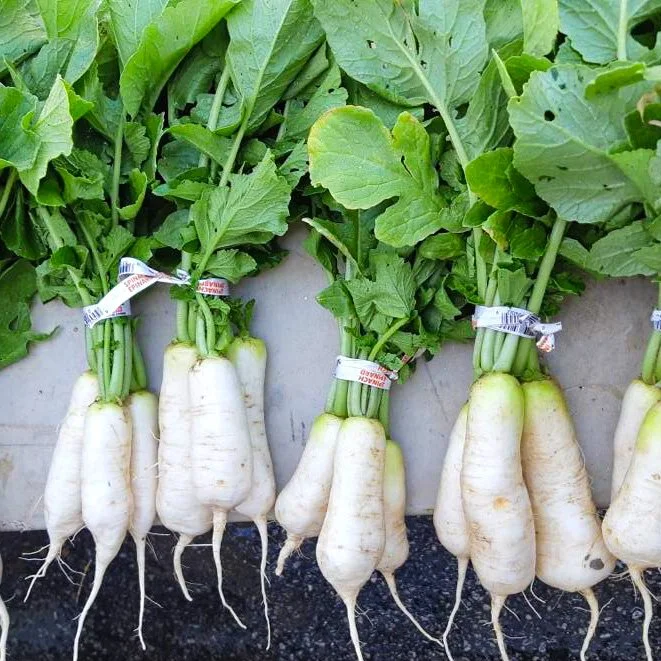
Pull Korean radish when the roots reach full size but before they get pithy or woody - usually when they're a few inches across at the shoulder. Don't leave them in the ground "just a little longer" hoping for bigger. Bigger past the sweet spot means tough and unsellable.
Handle them gentle. Buyers in the Asian produce market care about how the root looks - clean, straight, unblemished, with good color. A cracked or scarred radish gets downgraded or rejected. Wash, trim, and pack with the same care you'd want if you were the one buying it.
Keep them cool after harvest. The cold chain matters. A radish that gets warm loses shelf life fast, and shelf life is exactly what your buyer is paying for.
## Now the Part That Actually Matters: Who Buys It
Here's where most growing guides stop and leave you hanging.
You can grow the cleanest Korean radish in the county. But if you're standing in your field in November with a good crop and no buyer, you didn't grow a cash crop. You grew a science project.
This is the real reason small farms don't plant specialty crops - not because they can't grow them, but because the selling is a nightmare. The big wholesalers don't want to mess with a few bins. The commodity buyers don't know what a Korean radish is. And you don't have time to go hunting for an ethnic grocer three states over who might take your harvest at a price you can't predict.
That's the gap Organzo was built to close.
We buy the crop. Directly. You don't hunt for a buyer, you don't negotiate against yourself, and you don't gamble a season on maybe. When you partner with Organzo, you have a guaranteed home for that radish before you ever put seed in the ground.
On top of that, you get the part almost nobody offers small growers:
- The blueprint. There's no established playbook for growing most Asian vegetables in the Southeast. Our agronomic experience fills that gap - variety selection, timing, and the field-level details that turn a decent crop into a premium one.
- The market. We already have the buyers. Ethnic wholesalers, grocers, and export channels that specifically want domestic Korean radish and can't reliably get it.
- The logistics. Packaging, cold chain, distribution. You focus on the field. We handle everything after the harvest.
That's the difference between growing a crop and building an income.
Start Small, Prove It, Grow From There
You don't have to bet the farm on this.
Put Korean radish on a manageable plot this coming season. Fall's the time to plan for it. Grow it right, see how it fits your ground and your labor, and let the numbers make the case.
If it works the way it works for other Southeast growers, you'll have found something rare: a crop that fits your calendar, pays more per acre than your commodities, and comes with a buyer already lined up.
You handle the growing. That part you already know how to do.
Let us handle the rest.
Ready to Grow Something That Pays?
Korean radish is one of the easiest ways for a Southeast farm to step into higher-value specialty crops without turning the whole operation upside down.
Organzo partners with small and mid-sized growers to grow Asian vegetables that pay - with agronomic support, guaranteed purchase, and full logistics handled for you.